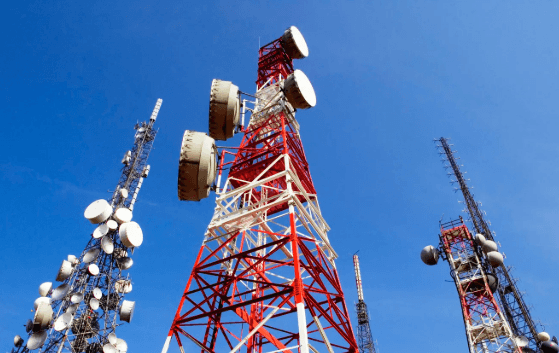
5G expands bandwidth and slashes latency, enabling near real-time collaboration across regions. Edge computing reduces round-trips, supporting local processing and predictable performance for coordinated cloud-endpoint orchestration. The result is adaptive bandwidth allocation and more resilient workflows, though security, privacy, and governance become pivotal as edge devices and network slices multiply. Global access gaps shape investment and policy decisions, raising questions about equity and sustained productivity as organizations scale remote operations.
How 5G Enables Real-Time Remote Collaboration
5G technology significantly enhances real-time remote collaboration by expanding bandwidth, reducing latency, and increasing reliability across mobile and fixed networks.
The model enables real time collaboration across geographies, supported by edge computing that minimizes round-trips and enables local processing.
This architecture delivers predictable performance, scalable bandwidth, and resilient services, aligning with enterprises seeking agile, freedom-oriented, data-driven work environments.
Security, Privacy, and Policy Considerations in 5G Remote Work
Security, privacy, and policy considerations in 5G remote work demand a rigorous, evidence-based assessment of risk, governance, and compliance across distributed networks. The analysis highlights privacy controls as essential to mitigate data exposure and regulatory breaches, while threat modeling identifies attack surfaces in edge devices and network slices. Data integrity, auditable governance, and cross-border policy alignment remain critical for secure scalability and adoption.
Redefining Workflows: Cloud, Devices, and Bandwidth Management
Redefining workflows in a 5G-enabled remote work paradigm hinges on the coordinated orchestration of cloud capabilities, endpoint devices, and dynamic bandwidth allocation. Data-driven analyses show cloud latency fluctuations shape collaboration timelines, while adaptive bandwidth allocation sustains foreground applications and backups. Enterprises optimize throughput by decoupling peak usage from latency, enabling resilient, scalable workflows and measurable productivity gains in distributed teams.
Access, Equity, and Global Implications of 5G Remote Work
Access to reliable 5G-enabled remote work varies widely across regions and socioeconomic groups, shaping who can participate in distributed teams and how productivity is distributed.
The analysis tracks digital equity, identifying gaps in global access and its impact on cloud workflows.
Findings emphasize bandwidth optimization, policy alignment, and infrastructure investment as critical levers for equitable, scalable remote operations.
See also: The Impact of Cybercrime on Businesses
Frequently Asked Questions
How Will 5G Affect Remote Onboarding and Training Experiences?
5G enhances remote onboarding and training by enabling richer onboarding UX and immersive training simulations, reducing latency and boosting real-time collaboration; analysts note faster skill acquisition and scalable workflows, appealing to freedom-seeking professionals pursuing efficient, data-driven development.
What Are 5g’s Implications for Latency in Virtual Meetings?
Latency improves with 5G, reducing virtual meeting pauses and jitters. The analysis notes latency resilience and bandwidth reliability rise, enabling smoother collaboration, data-driven decisions, and freer, more fluid workflows for global teams in real time.
Can 5G Reduce Costs for Small Businesses in Remote Work?
5G can reduce costs for small businesses in remote work by enabling cost savings through improved bandwidth upgrades, network efficiency, and scalable connectivity, while maintaining predictable expenditures and facilitating flexible, data-driven operational choices for freedom-seeking organizations.
How Will 5G Influence Fieldwork and Remote Collaboration Tools?
Astounding progress accelerates fieldwork and remote collaboration, as 5G enables high speed connectivity and lower latency. It supports enhanced collaboration, enabling real-time data sharing, remote monitoring, and seamless tool integration, shaping autonomy, efficiency, and data-driven decision making.
What Are Metrics to Measure 5G Impact on Productivity Remotely?
Latency benchmarks and bandwidth governance emerge as core metrics for measuring remote productivity with 5G, enabling data-driven comparisons across teams. Analysts evaluate throughput consistency, outage incidence, and task completion rates, emphasizing industry benchmarks and freedom-oriented, analytical decision frameworks.
Conclusion
The study alludes to a future where 5G acts as a catalyst for synchronized, cross-border workflows, much like a conductor guiding diverse instruments. Data indicate tangible gains in collaboration latency, edge processing efficiency, and adaptive bandwidth orchestration, yet security and governance remain the chorus of caution. As enterprises balance equity and innovation, the pattern suggests that disciplined policy and resilient architectures will convert bandwidth advantage into durable, scalable remote-work performance.
