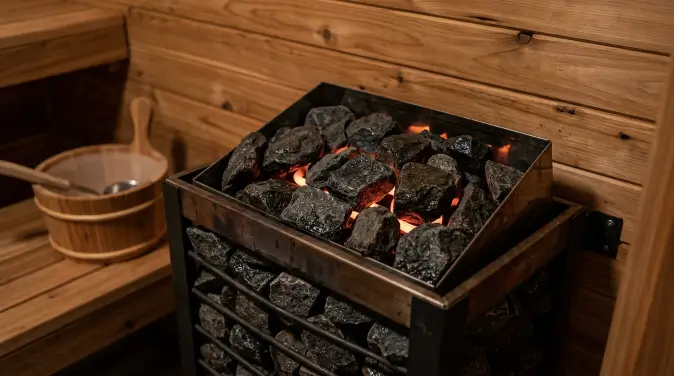
Electric heaters start with a switch or timer, hold a steady thermostat-controlled temperature, and need a dedicated 240-volt circuit for most home-sized units. Wood-burning heaters need no electrical wiring but require a chimney and flue, seasoned firewood, ash cleanup after every session, and more active tending while the fire builds. Neither is objectively better; the right choice depends on whether someone wants a quick, hands-off session or is drawn to the more hands-on ritual of building a fire.
1. Getting Started: Switch vs Fire
An electric heater turns on with a switch, app, or built-in timer, and most home units reach a usable temperature within 30 to 45 minutes without any further attention needed once it is running. A wood-burning heater requires building a proper fire in the firebox, feeding it as it establishes, and typically takes 45 minutes to an hour to bring both the room and the stones up to a full working temperature. For someone who wants a sauna ready on a weeknight with minimal setup, electric wins on convenience alone.
2. Electrical Work vs Chimney Work
Electric heaters sized for home use, typically 4.5 to 9 kW, need a dedicated 240-volt circuit installed by an electrician, with breaker and wire gauge matched to the unit’s draw. Wood heaters skip electrical work entirely but require a properly installed chimney and flue rated for a solid-fuel appliance, along with roof or wall penetration done to code, and most jurisdictions require a permit for that chimney installation specifically. Both paths involve a professional and a permit; they are just different trades and different inspections.
3. Ongoing Maintenance: Almost None vs Ash and Creosote
An electric heater’s ongoing maintenance is mostly limited to checking and occasionally replacing stones as they crack from repeated heat cycling. A wood heater adds ash removal after each use, periodic creosote checks in the flue to reduce chimney fire risk, and firewood that needs to be split, seasoned, and kept dry in covered storage. That extra maintenance is part of the appeal for people who like a more hands-on hobby, and a real added task list for people who just want a low-effort weekly habit.
See also: The Impact of Cybercrime on Businesses
4. Temperature Consistency: Thermostat vs Fire Behavior
Electric heaters with a built-in thermostat hold a steady target temperature for the whole session, cycling on and off automatically. A wood fire naturally rises as it builds, tends to run hotter right after adding fuel, and gradually cools as the fire burns down unless it is actively fed, which gives a session more temperature variation over its length. Some experienced users prefer that natural rise and fall as part of the traditional experience; beginners often find the steadier electric curve easier to predict and plan a session around.
5. Rock Load and Steam: Nearly Identical
Both heater types use a stone bed, generally 40 to 100 pounds of sauna-grade rock depending on unit size, and both produce steam the same way, water ladled over the hot stones. This is one area where the two types are genuinely similar rather than different; the steam and humidity a session produces comes from the rocks and the water, not from whether the heat source underneath them is electric resistance or burning wood.
6. Running Cost: Predictable vs Regional
Electric cost is straightforward to estimate: a typical session uses a few kilowatt-hours at the local utility rate, which is easy to predict and budget month to month. Wood cost depends heavily on regional firewood prices and whether someone is buying seasoned wood or has access to their own supply, which can make it noticeably cheaper or more expensive than electric depending on where they live. Neither has a universal cost advantage; it comes down to local electricity rates against local wood prices, and it is worth checking both before assuming one is automatically the cheaper long-term choice for a specific address.
7. Footprint and Installation Flexibility
An electric heater’s compact housing mounts to a wall or corner and takes up little floor space beyond its required clearance, which makes it easier to retrofit into an existing shed, basement corner, or converted closet. A wood heater needs floor clearance for the firebox door, a path for feeding fuel, and a roof or wall penetration for the chimney, which limits where it can realistically go and often rules out an indoor conversion project entirely. For a backyard build from scratch, either works; for retrofitting a space that already exists, electric is usually the more flexible option since it does not require altering the roofline or an exterior wall.
Where Should a Beginner Start Looking?
For a first sauna, electric heat removes several variables at once: no chimney permit, no fuel storage, no fire-tending learning curve, and a temperature curve that is easy to predict session after session. Wood heat remains a strong option for someone building a more traditional, off-grid, or cabin-style setup where the ritual of the fire is part of the draw, not an inconvenience. Either way, it helps to see current heater specs side by side before deciding on wattage, firebox size, and included stones. It is worth taking time to shop the current options across both heat types rather than assuming one is automatically the better fit without comparing actual models.
What Does the Broader Sauna Research Say About Heat Source?
The cardiovascular and longevity research behind sauna use, including a 2018 review in Mayo Clinic Proceedings and a 2001 paper in The American Journal of Medicine, is built around traditional Finnish-style sessions and does not distinguish between electric and wood heat sources, since both produce the same dry-heat, periodic-steam environment the studies describe. A 2018 systematic review in Evidence-Based Complementary and Alternative Medicine reaches a similar conclusion: the associations tracked in the literature are tied to the heat and humidity exposure itself, not to which type of heater produced it.
Frequently Asked Questions
Is an electric sauna heater or a wood-burning heater easier for a beginner? Electric is generally easier, needing no fuel storage, ash cleanup, or fire tending, with most models starting on a switch or timer.
Does a wood-burning heater need a chimney permit? Most jurisdictions require a permit for the chimney and flue. An electric heater typically only needs an electrical permit for the circuit.
Which type gives better steam and humidity control? Both produce steam the same way, over hot stones. Electric heaters hold a steadier baseline temperature thanks to a thermostat.
Which costs less to run session after session? It depends on local prices. Electric cost is predictable per kWh; wood cost depends on regional firewood pricing.
References
- Cardiovascular and Other Health Benefits of Sauna Bathing: A Review of the Evidence, Mayo Clinic Proceedings, 2018
- Benefits and risks of sauna bathing, The American Journal of Medicine, 2001
- Clinical Effects of Regular Dry Sauna Bathing: A Systematic Review, Evidence-Based Complementary and Alternative Medicine, 2018
By Dominic Farrow
